
How to Pick a Train Seat That Does Not Make You Miserable (Europe Edition)
Window or aisle, forward-facing or back, table or no, four-seat or two-seat, quiet car or normal. A working seat-selection guide for the trains you are likely to take in Europe.
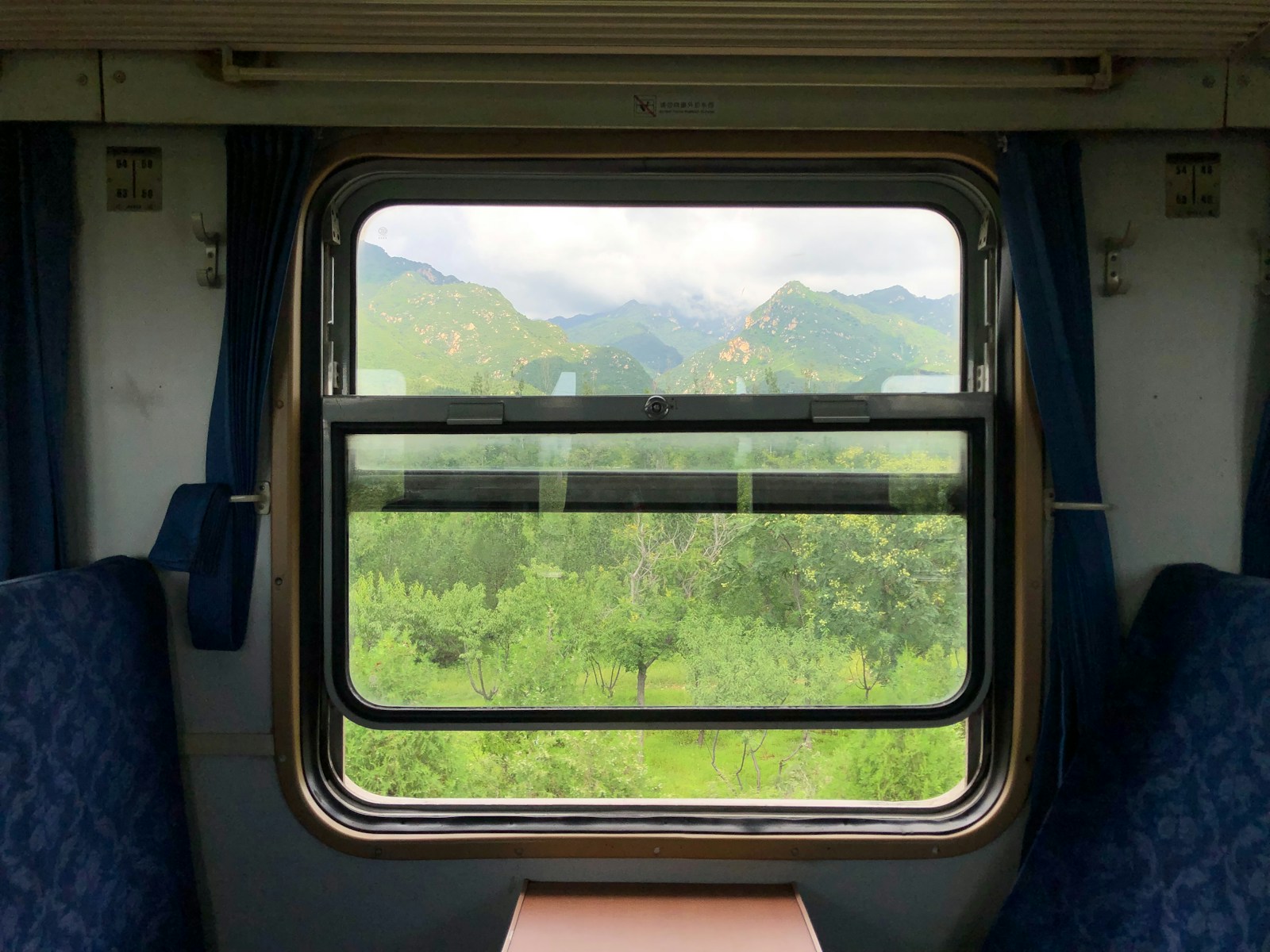
European trains are mostly pleasant, but not all seats on a European train are equally pleasant. The booking flow on most rail operator sites is set up to encourage you to accept whatever seat the algorithm picks, which is fine on a 90-minute trip and a small disaster on a six-hour one. Below: how to pick the right seat on the European trains you are most likely to take, in roughly order of how often Americans actually take them.
We will cover: ICE (Germany), TGV/inOui (France), Eurostar (Channel Tunnel), Frecciarossa (Italy), Renfe AVE (Spain), and the older intercity regionals you will end up on for the smaller cities. Practical advice only.
The four questions to ask before you pick
Before you look at the seat map, decide:
- Forward-facing or backward-facing? On most operators about half the seats face backward. Forward is genuinely better if you read or work; backward is fine if you sleep or look out the window. Important: on the TGV, the forward direction reverses at certain stations. A "forward" seat from Paris is a "backward" seat from Marseille on the same trip.
- Window or aisle? Window is almost always better for the view and the wall to lean against. The downside is on a six-hour trip you will need to climb past your seatmate to use the toilet at least twice. If you are tall or have a large bag, aisle gives you the floor space.
- Table or no table? Most modern European trains have facing pairs of seats (4 seats around a table) and rows of single seats (2+1 or 2+2 with no table). The table seats are dramatically better for long trips, working, and meals; they are also social, meaning you will be facing a stranger. If you want privacy, pick a non-table seat.
- First class or second? First class on most European trains is worth the small premium for trips over three hours. Less crowded, more legroom, sometimes a meal included, and on some operators (Eurostar Standard Premier, Frecciarossa Business) the food is genuinely good.
ICE (Deutsche Bahn, Germany)
The ICE is Germany's high-speed train, running between major cities at up to 300 km/h. The ICE 1 and ICE 2 are older; the ICE 3 and ICE 4 are newer and significantly more comfortable.
Best seats: Coach 26 or 27 in second class on a long ICE 3 or 4 train; these are the front-most coaches with table seating and tend to have fewer transient passengers. In first class, coach 11 or 12.
Avoid: Coach 21 (the dining car-adjacent coach has people walking through constantly). Avoid the seat directly above the bogies (the trucks under the train); on older ICEs these are rows 21-23 in some coaches, and the ride is noticeably rougher.
The Quiet Car: ICE has a "Ruhebereich" (quiet car) marked clearly on the seat-selection page. Phone calls are forbidden, kids are discouraged, and the conductor will enforce. If you are working or napping, choose this car. If you are traveling with a chatty friend, do not.
TGV / inOui (SNCF, France)
The French TGV (now branded inOui on most domestic routes) is a different beast. The seats are arranged in a "duplex" double-decker on most modern routes, and the upstairs is much more pleasant than the downstairs.
Best seats: Upstairs, second class, in a forward-facing window seat. The view from the upstairs is genuinely lovely on the Paris-Lyon-Marseille run. The seats labeled "salon" on the SNCF site are the table-facing pairs; they are roomier than the rows.
Avoid: Downstairs entirely if you can. Lower view, more vibration, more people walking past. Also avoid coach 1, which is closest to the engine and has more noise on most TGV sets.
Direction reversal: The TGV reverses direction at several junction stations (Lyon Part-Dieu, Toulouse, etc.). Your "forward-facing" seat at booking will become backward at that station. SNCF's seat map does not flag this; the workaround is to ask at the station for the direction your specific train will travel out of the next major junction.
Eurostar (London ↔ Paris/Brussels/Amsterdam)
The Eurostar is the train through the Channel Tunnel. It is the most security-heavy of the European trains (full passport check on both sides, security scan of bags), and worth being there 45 minutes before departure.
Best seats: Standard Premier class, coach 7 or coach 14 (the quieter mid-train coaches), in a single-aisle window seat. Standard Premier includes a tray meal that is fine, free wifi that is decent, and a quieter cabin than Standard.
Avoid: Coach 3 (children's coach by default on most departures). Coach 6 (the bar/buffet coach has heavy foot traffic).
One trick: The seats on the right-hand side of the train heading from London to Paris (so the right side of the train pointing toward Paris) face away from the rising sun on a morning departure. On a Paris-to-London afternoon, the right side avoids the setting sun. This sounds minor; it is not, on a sunny day.
Frecciarossa (Italy)
The Italian high-speed network runs between Milan, Rome, Naples, Turin, Venice, Florence, and Bologna at up to 300 km/h. The Frecciarossa 1000 trains are the newest and most comfortable.
Classes: Standard, Premium, Business, and Executive. Business is the sweet spot: comparable to French first class, includes a small snack and drink, and usually has a quieter cabin. Executive is overkill unless you really need a private compartment.
Best seats: Coach 6 in Business, the "salottino" (a small four-person enclosed compartment), if you are traveling with three friends or want maximum privacy. Otherwise, any window seat in Business is fine.
Avoid: Standard class on the Rome-Naples route during commute hours; it gets very full and can be loud.
Renfe AVE (Spain)
The Spanish high-speed train runs between Madrid, Barcelona, Seville, and several other cities. The newer trains are excellent.
Classes: Turista, Turista Plus, Preferente, Premium. Preferente is the standard upgrade and worth it for trips over two hours; Premium adds a meal and lounge access.
Best seats: Preferente window seats in coach 1 or 2 on the Madrid-Barcelona route. Coach 1 has a small lounge area at the front you can stretch in.
Avoid: The middle coaches (5-7) tend to fill with families and groups. The very back coach is closer to the bathrooms, with all that implies.
Older intercity regionals (everywhere)
You will end up on these for the smaller cities: Köln-Aachen, Verona-Bolzano, Avignon-Marseille on a slow service, etc. They tend to be older 1990s-vintage stock without seat selection.
Tactics:
- Board early and pick yourself a seat in the middle of the train (less noise from doors and bathrooms).
- Avoid the seats with reservation labels even if they are unreserved at boarding; the reservation may activate at a later station.
- The first-class car on these trains is often empty and worth the small upgrade just for the quiet.
A few small things that always help
- Bring a layer. European trains are aggressively air-conditioned in summer and over-heated in winter. The cardigan you wore to the station is often the wrong layer for the train.
- Carry your important stuff in a small bag in the seat with you. The luggage racks at the end of the coach are out of sight; the overhead racks are visible. Wallets and passports stay in a small bag at your feet.
- Buy a coffee from the dining car early. The lines build through the trip. The coffee on most European trains is better than the airline equivalent and worth the walk.
- Reserve early on TGV, Eurostar, and AVE. These are reservation-required and the prices climb sharply close to departure.
- Do not reserve at all on most German regional and Swiss trains. They are turn-up-and-go.
The bottom line
The European train is one of the world's best ways to travel, but the experience is shaped by where you sit. Forward-facing window in a quiet coach in first class is not a luxury; it is a 25 percent better trip for a 30 percent higher fare. For a six-hour journey, that math works easily. For a 90-minute hop, second-class anything is fine. Pick on the operator-specific tactics above and you will avoid the bad seat that ruins a long ride.