
The Five-Minute Hotel-Room Setup I Do Every Time
A small ritual that turns a generic hotel room into a place you can actually live for four days.
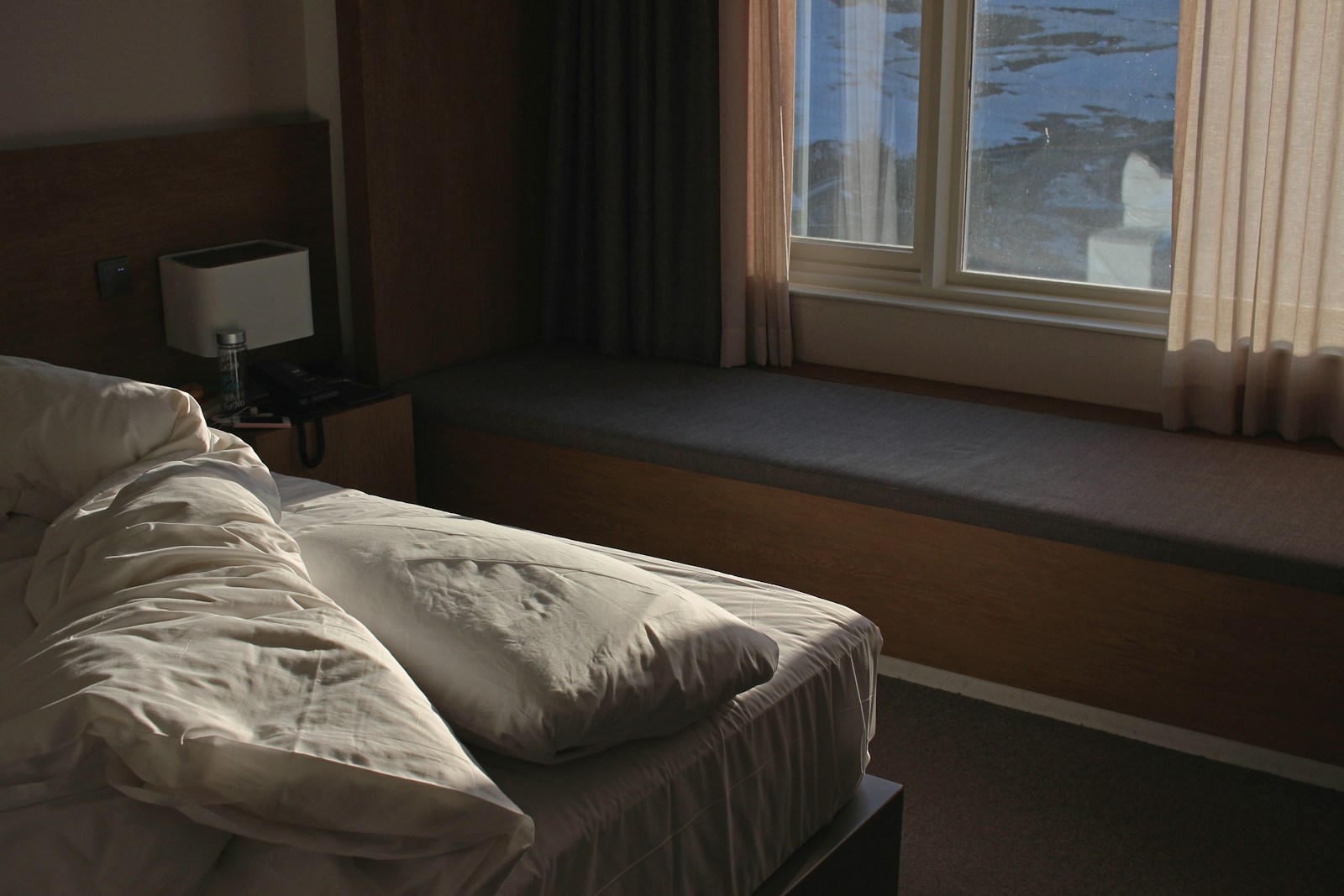
There is a moment in every hotel room, on every trip, when you put the bag on the luggage rack, sit on the edge of the bed, and consider the next four days. The room is fine. It is also someone else's idea of what your life should look like for the next four days. The lamp is in the wrong place. The closet is across the room from the bathroom. The temperature is set to 68 degrees because the previous guest preferred it that way. Nothing is wrong, exactly, but nothing is yours.
What I have started doing, on every trip, is the same five-minute reset. It is not a productivity hack. It is not a "transform your travel" video. It is a small ritual that takes a generic hotel room and makes it a place I can actually live for four days. I do it before unpacking, before checking email, before anything.
Here it is.
Step 1. Open the windows or curtains, and turn off every light.
The first thing I do in a new room is reset the light. Hotels overhead-light their rooms because most guests will not notice; turning off everything and opening the curtains tells you what you are actually working with. Daytime arrival, you want as much daylight as possible. Nighttime arrival, you want the city light from the window, which is usually warmer than the room's lamps. Then turn back on only the lights you actually want: the bedside, the desk, the corner if there is one. The overhead almost always stays off.
This takes 60 seconds. It changes the room more than any other thing I do.
Step 2. Set the temperature to 65 degrees.
The default hotel temperature is between 67 and 70. The right temperature for sleeping in an unfamiliar bed in a city you do not know is between 64 and 67. Set it now. The room takes 20 minutes to cool down, and you will not remember to do this at 11 p.m.
If the thermostat is one of those hotel-grade units that locks you out at 68: there is almost always a small "VIP override" code, usually printed in a service guide in the desk drawer, or available from the front desk for the asking. Ask. They will give it to you.
Step 3. Move one piece of furniture.
The desk chair is too far from the desk. The lamp is too far from the bed. The luggage rack is in front of the closet you actually need to open. Move one thing.
This sounds trivial. It is not. The room was arranged by the housekeeping staff for the next guest, in general; you are the next guest. Adjusting one piece of furniture so it works for your specific routine over the next four days takes 30 seconds and changes the room from "this is a hotel room" to "this is a place I am living." It is the smallest possible act of agency in someone else's space.
Step 4. Put three things in the same place every trip.
I always put my passport, my phone charger, and my notebook in the top-left drawer of the desk (or, if there is no desk, the top-left of whatever surface is closest to the bed). Always. Every trip. By trip three or four, the muscle memory means I do not have to think about where my passport is at 4 a.m. when I am leaving for an early flight.
Pick your three things. Keep them consistent. The only rule is that the place you put them should be in the same orientation in every hotel: top-left of a surface, by the bed, etc. This is the closest thing to a personal grid you can carry into someone else's furniture.
Step 5. Open the suitcase, but do not unpack it.
This is the unintuitive one. Open the suitcase, lift the lid, and just leave it open on the luggage rack. Pull out one or two things you will need first (the toiletry bag, the book) and put them in their places. Leave everything else in the bag.
Why: most trips are short enough that fully unpacking is wasted effort. You will use 60% of what you brought. The 40% you do not use should stay in the bag where it is easy to repack on departure day. Opening the bag and lifting the lid means the contents are visible and accessible without you having to actively unpack and repack them. It is the lowest-effort version of "I know where everything is."
The exception is trips longer than five days, where I do unpack into the closet and dresser. The cutoff is about five days. Below that, the open-suitcase-on-a-rack is the right answer.
Why this matters
A hotel room is, almost by design, a place that resists being yours. The five-minute setup is not about pretending it is. It is about reducing the small frictions that accumulate over four days in someone else's space: the wrong light, the wrong temperature, the not-quite-right placement of things, the slow daily search for the passport. Each of these is small. Their sum is what makes a long work trip feel longer than it is.
I do not romanticize the ritual. It is a thing I do because I have done it enough times to know the next four days will go marginally better with it than without. That is the entire promise.
The bottom line
Five minutes, no gear, no special trick. Lights off, then back on selectively. Temperature down. One piece of furniture moved. Three things in the same place every time. Open the bag, do not unpack it. Then sit down on the edge of the bed and take a breath. The next four days are now slightly more yours.