
The 24-Hour Lost-Luggage Recovery Playbook
What to do in the first hour, the first day, and the first week. A working playbook for the moment your bag does not come down the carousel.
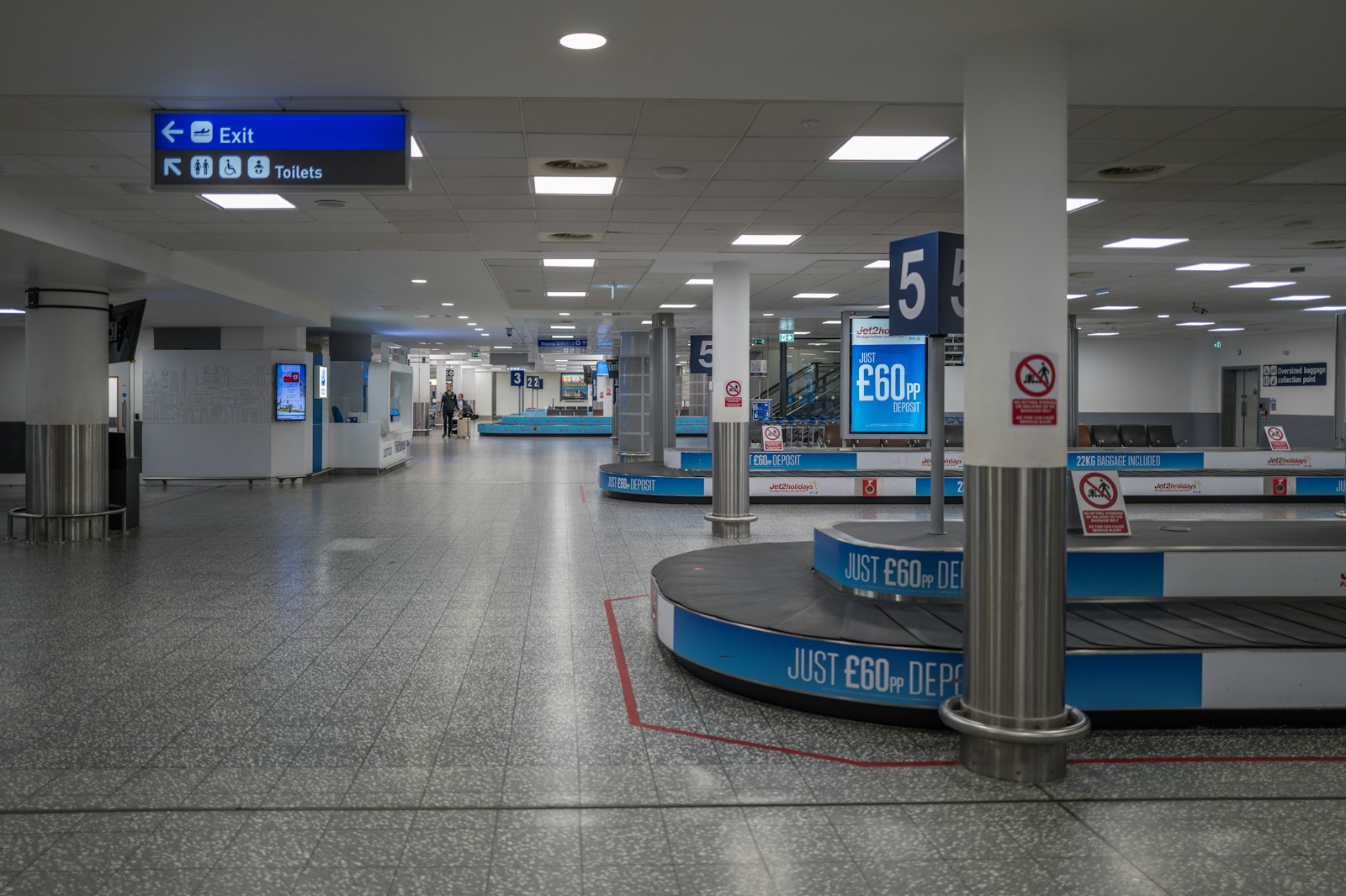
The carousel slows down. The crowd thins. Two unclaimed bags loop past for the third time. The conveyor stops. Your bag is not on it.
This has happened to about 1 in 100 of our checked bags over the years. The recovery system, on the airline side, has gotten better in the last five years; the playbook for what you should do has not changed much. Below is what to do in the first hour, the first day, and the first week, in roughly that order.
In the first hour: at the airport
Step 1. Find the airline's baggage office before you leave the carousel area. It is usually on the same floor, often tucked to one side of the baggage hall. Every major airport has one for every airline that operates there. If you leave the secure baggage area, getting back in to file the report is a hassle.
Step 2. File a delayed-baggage report (a "Property Irregularity Report" or PIR). The airline agent will issue you a reference number, sometimes called a "file" or a "rush tag" number. Write it down. Photograph the paper they give you. This number is the only thing the airline can use to track the bag, and it is the only thing you can use to follow up.
Step 3. Confirm three things before you leave the desk:
- Where will the bag be delivered? (Hotel address, your home, etc.)
- Within what window? ("We will call you within 24 hours" is fine; "We do not know" is a flag to escalate.)
- What is the airline's per-day "interim expense" allowance for delayed luggage?
That last one matters. Most major airlines allow $50 to $150 per day in essential-purchase reimbursements while your bag is missing, but they will not volunteer this. Ask explicitly: "What is your daily reimbursement for essential purchases while my bag is delayed?" You will get a number.
Step 4. Take photos of:
- Your baggage claim ticket (the original sticker the airline gave you at check-in)
- The Property Irregularity Report
- A photo of the airline desk and the agent's name badge if you can do it discreetly
You will need these later if the bag is delayed long enough to require a real claim.
In the first 24 hours: at the hotel
Step 5. Buy what you need to function for 24 hours, no more. This is the single most-misunderstood rule. Airlines reimburse "reasonable essential purchases" while your bag is missing, but they enforce reasonable narrowly. The good rule: buy what you need to get through the next 24 hours and the next morning, and save every receipt. Toothbrush, toothpaste, deodorant, one shirt, one pair of underwear, basic toiletries. Buy at the hotel shop or the nearest pharmacy, not at the duty-free in the airport (which they will sometimes refuse to reimburse).
Step 6. Keep the receipts. All of them. Photographed and physical.
Step 7. Check the bag tracking online or via the airline app, every 4 hours. Most major airlines now have real-time bag tracking via their websites, using the file number from the PIR. If the bag has been located, you will see it; if it has not, the system will say so. United, Delta, American, BA, Lufthansa, KLM, Emirates, and Qatar all have decent self-service tracking now. Air France's is mediocre. Some smaller carriers have nothing and you must call.
Step 8. If the bag has not been located by hour 24, escalate. Call the airline's central baggage line, not the local airport desk. Have your file number ready. Ask:
- "What is the current location of my bag according to your system?"
- "When is the next opportunity for it to be delivered to me?"
- "What is the procedure for an interim expense claim?"
Be polite, persistent, and brief. The agent on the phone has a lot of leverage they will use if you are easy to work with.
Day 2 to day 5: when the bag is genuinely lost
Step 9. Continue tracking and continue receipts. If the bag is missing for more than 24 hours, your daily allowance for essential purchases usually increases. Some airlines bump from $50 to $100, or from $100 to $150. Ask explicitly when escalating.
Step 10. After 48 hours of "not located," the airline opens a tracing case. This is a more serious internal process and you will be assigned a case manager (or, on smaller carriers, just a case number). At this point the airline is actively searching their network for the bag. Most bags that are going to be found are found within 72 hours.
Step 11. After 96 hours, document everything in the bag. The airline may ask for a list of contents, with replacement values, photos if possible, and a sworn statement that the items were in the bag. If the bag is not recovered, this list becomes your claim. Be honest. The airline will scrutinize a $1,200 cashmere sweater more carefully than a $80 dress; gold jewelry, electronics over $500, and prescription medication are red-flagged automatically.
Step 12. If the bag has not been recovered by day 7, the airline officially declares it lost. Different airlines use different timelines (usually 5 to 21 days), but the practical line is around a week. At that point, the claims process opens.
Filing a claim
Two routes:
The airline's claim process. Lower compensation, faster. Most major airlines pay out around $1,500 to $3,800 per bag for international lost-luggage claims (the limit is set by the Montreal Convention, currently 1,288 SDR, about $1,750 USD). For domestic flights, the cap is usually around $3,800 in the U.S., but actual payouts are lower. Submit the contents list, receipts for replacement purchases, and the airline's claim form.
Your travel insurance or credit card insurance. Higher compensation, slower, more paperwork. Most premium credit cards (Chase Sapphire, Amex Platinum, etc.) include trip-interruption and baggage-loss insurance that often pays out faster and at higher limits than the airline. Check your card's benefits guide. The insurer may require you to file with the airline first and submit the airline's denial as part of their claim.
You can usually file with both, though the credit card insurer will subtract any airline payout from theirs. Net to you, you usually do not double-recover.
What to keep in your carry-on, always
The single biggest lesson from a lost bag is what should never have been in the bag.
- Prescription medication, in the original bottle, with enough for the trip plus a buffer.
- One full change of clothes. Underwear, a top, a layer. Whatever fits.
- Phone chargers and cables.
- All electronics over $200. Cameras, laptops, tablets, jewelry.
- Travel documents. Passport, vaccine cards if you still need them, copies of trip confirmations.
- One day of toiletries. Toothbrush, deodorant, contacts.
- A $20 bill in the local currency for taxi or food at arrival if your card does not work.
Everything in this list either takes up almost no space or is not legally allowed in checked luggage anyway (lithium batteries above certain wattages, some medications). The rule of thumb: pack the bag as if it might not arrive. On the trips where it does arrive, you have lost nothing. On the trips where it does not, you have a 24-hour cushion that costs you almost no carry-on weight.
A few small things
- Pack a photo of your bag. When you file the PIR, the airline asks for description. "Black 22-inch four-wheel hardside" describes about a third of the carousel. A photo of your specific bag, with any unique markings, helps recovery dramatically.
- Use a colored luggage tag and a colored ribbon on the handle. Same reason. A black bag with a yellow ribbon is identifiable; a black bag without is not.
- Use AirTags. Apple AirTags or Tile in checked luggage are the single most useful upgrade in the last five years. They show you the bag's actual current location, which is often different from what the airline tells you. We have used AirTags to direct an airline to the actual airport where our bag was sitting, saving 36 hours.
- Skip the lock on a checked bag. TSA-approved locks are fine. Non-TSA locks get cut. Honestly, most stuff worth stealing should not be in your checked bag in the first place; a lock is mostly theater. But TSA-approved is better than a cut zipper.
The bottom line
A delayed bag is annoying. A truly lost bag is rare. The recovery system works, but only if you start the process in the first hour, document everything, ask for the daily allowance explicitly, and keep every receipt. The single most useful preparation is what stays in your carry-on rather than the checked bag: medication, documents, electronics, one change of clothes, and a phone charger. Pack the carry-on like the checked bag might not arrive. On the days it does arrive, no harm done. On the rare day it does not, you have already won 24 hours.