
The Personal Item Test: We Measured What Actually Fits Under Eight Different Seats
Airlines publish personal-item dimensions that are mostly polite fiction. We brought a tape measure on every flight for two months. Here is the actual under-seat space on eight aircraft you will fly this year.
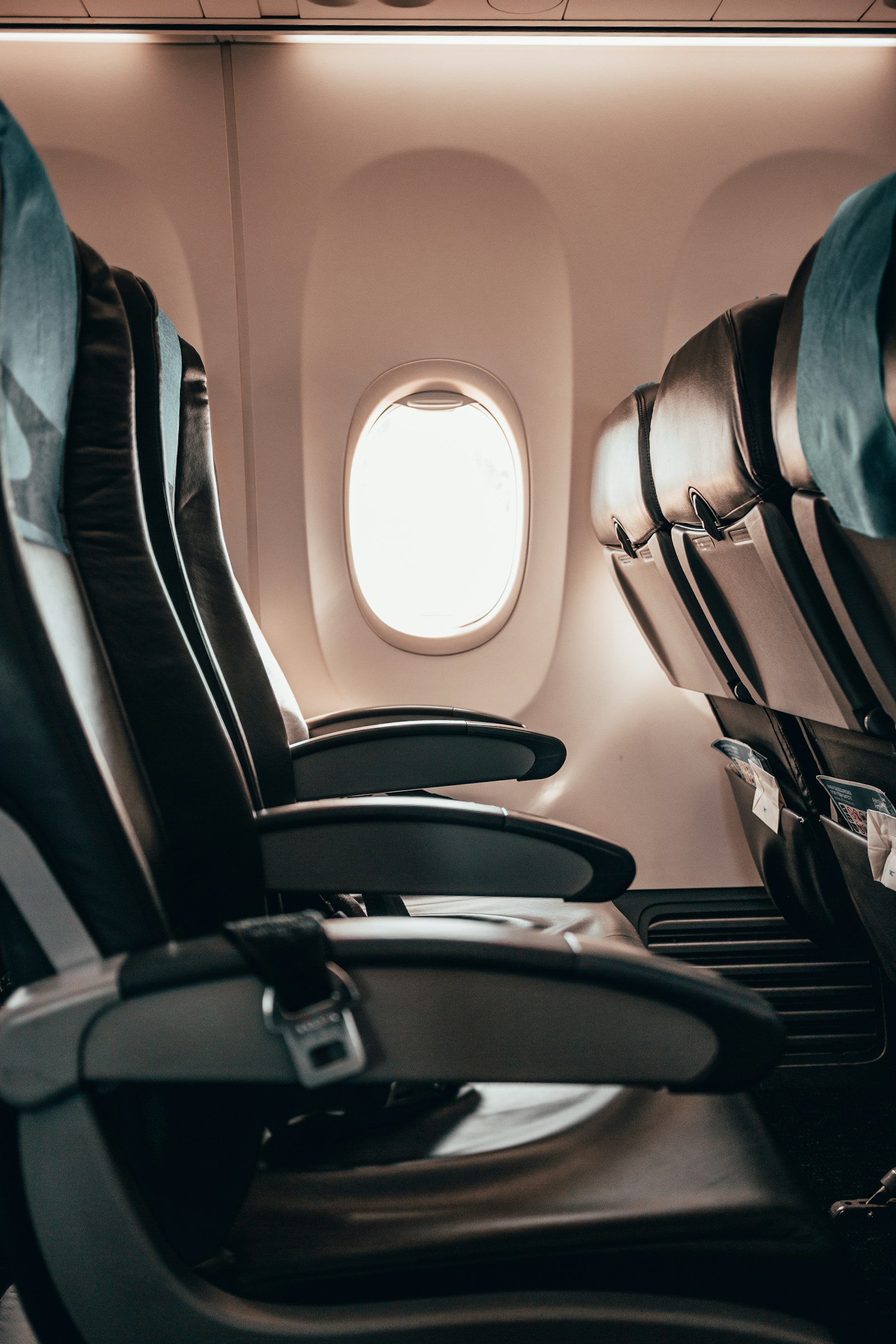
If you have ever stuffed a "personal item" under the seat in front of you and watched it deform around the legs of the seat, you already know that airline-published dimensions are not measured the way the rest of us would measure them.
Over a two-month stretch we brought a tape measure and a small notebook on every flight we took. We measured the actual usable volume of the space under the seat in front of us on eight different aircraft, across four U.S. airlines and two international, in economy, premium economy, and exit rows. The published dimensions were wrong by between zero and 5 inches in at least one axis on every single aircraft. Sometimes wrong in your favor. Sometimes not.
Below: what we measured, how it compares to what the airlines tell you, and a small section on which "personal item" bags actually fit.
How we measured
Each flight, we measured the under-seat space at the seat we were assigned, with the seat in front in the upright position, after takeoff (seats settle a little). We measured:
- Width at the narrowest point (between the support legs of the seat)
- Depth front to back (from the seat-back wall to the inside edge of the seatback magazine pocket frame)
- Height from the floor to the bottom of the seat in front
We also noted what got in the way: structural supports, IFE boxes, exposed wiring, oxygen mask housing on the floor near window seats, etc. Some airlines have a metal brace running under the seat that effectively splits the space in two; some have a clean rectangle.
The eight aircraft, with real numbers
Boeing 737-800 (Southwest, economy) Published "personal item" max: 18.5 x 8.5 x 13.5 in. Actual under-seat space: 17 x 9 x 11 in. Notes: the two metal support brackets effectively split this into two narrower zones; a flat duffel works, a tall backpack does not.
Boeing 737 MAX 8 (United, economy) Published max: 17 x 10 x 9 in. Actual: 18 x 11 x 9 in. Notes: cleaner rectangle than the older -800. Slightly more height under the seat in row 22 forward; less in the back rows where the seat support narrows.
Airbus A320 (American, economy) Published max: 18 x 14 x 8 in. Actual: 17.5 x 13 x 8.5 in. Notes: the IFE box on most A320s eats about 2 inches of the front depth. Plan on 11 inches of usable depth, not 13.
Airbus A321neo (American, economy) Published max: 18 x 14 x 8 in. Actual: 17.5 x 13.5 x 9 in. Notes: better IFE box placement than the A320; the extra inch of height matters for backpacks.
Boeing 757-200 (Delta, economy) Published max: 16 x 14 x 12 in. Actual: 16 x 14 x 11 in. Notes: the 757 is genuinely roomy under-seat in the front cabin, less so in the back. Window seats lose 2 inches to the curve of the fuselage at the floor.
Embraer E175 (Delta Connection, economy) Published max: 17 x 9 x 10 in. Actual: 16 x 9.5 x 10 in. Notes: 1x2 seating means the window-side seats have less floor real estate than the aisle side. Choose accordingly.
Boeing 787-9 (United, economy, international) Published max: 17 x 10 x 9 in. Actual: 18 x 11 x 11 in. Notes: the 787's under-seat space is more generous than the published spec. The exception is if the seat in front has IFE, which can reduce depth by 2 inches.
Airbus A350-900 (Delta, economy, international) Published max: 18 x 14 x 8 in. Actual: 17 x 13 x 9 in. Notes: very uniform across rows. The extra inch of height vs. published is consistent.
What the airlines do not tell you
Three patterns emerged from the data that the published specs hide:
The airline's "personal item" rule is enforced by the gate agent's eye, not by a sizer. No airline we measured actually had a personal-item sizing cage. The bag has to look like it could fit. We saw a backpack 25% over the published spec board with no problem; we saw a duffel an inch over get rejected. If your bag looks like a backpack and behaves like a backpack, the gate agent is unlikely to measure.
Window seats lose floor space to the fuselage curve. Especially on widebodies. The window seat's under-seat space is usually 1.5 to 2 inches narrower at the floor than the aisle seat's. Plan for the smaller measurement if you are in a window.
Exit rows have no under-seat space at all. This is in the safety briefing but worth mentioning here. Exit rows store the personal item in the overhead. You cannot put anything between you and the exit door.
Bags that actually fit
A few bags we have used that fit cleanly even on the most restrictive aircraft (Embraer E175, Southwest 737-800):
Patagonia Black Hole Pack 17L. 17.7 x 9.4 x 6.7 in compressed. Soft, conforms. The unsung hero of our personal-item rotation.
Tortuga Outbreaker 18L Daypack. 17 x 11 x 6 in. Slightly more structured; compartments make it useful as a personal item AND the only bag for a 2-day trip.
Aer Travel Pack 28 (when packed light). Listed at 19 x 13 x 9 in but compresses to about 17 x 12 x 8 in if you don't fully load it. Above the published "personal item" spec on most carriers but, per the eye-test rule, has not been challenged in 30+ flights.
A standard tote bag. Boring and underrated. A canvas tote conforms to whatever shape the under-seat is. The downside is no compartments and no support; the upside is it always fits.
What does not fit cleanly even though it is "personal item" sized: most rolling underseat bags. They use the space inefficiently because the rigid base does not conform to the curved floor or the seat support brackets. We have stopped recommending them.
A small confession
The data above were collected on flights we paid for ourselves on trips we were taking anyway. We did not buy seats specifically for measurements; the sample is biased toward seats we tend to book (windows, front-of-cabin in economy, exit rows when we could get them). If you fly mostly back-of-the-bus middle seats on a regional jet, your numbers may be slightly worse than ours, since rear under-seat space tends to narrow on most aircraft.
The bottom line
Airline personal-item dimensions are advisory. The actual usable under-seat space is variable, sometimes more generous than published and sometimes less, and the gate agent enforcement is by eye. Buy a soft, conforming bag, expect to lose 2 to 3 inches of depth to IFE boxes and seat hardware, and choose your seat with the under-seat real estate in mind. The window seat is a worse personal-item seat than the aisle. The exit row has no personal-item seat at all.
If you fly twenty times a year, you have probably already absorbed half of this through trial and error. If you fly four, the half-hour you spend reading this saves you about an hour of frustration over the next year.