
I Took the Sleeper Train From Vienna to Venice. Here Is What It Was Like.
A first-person ride on the ÖBB Nightjet, from booking to breakfast in Italy. What worked, what did not, and whether it is worth the premium over a flight.
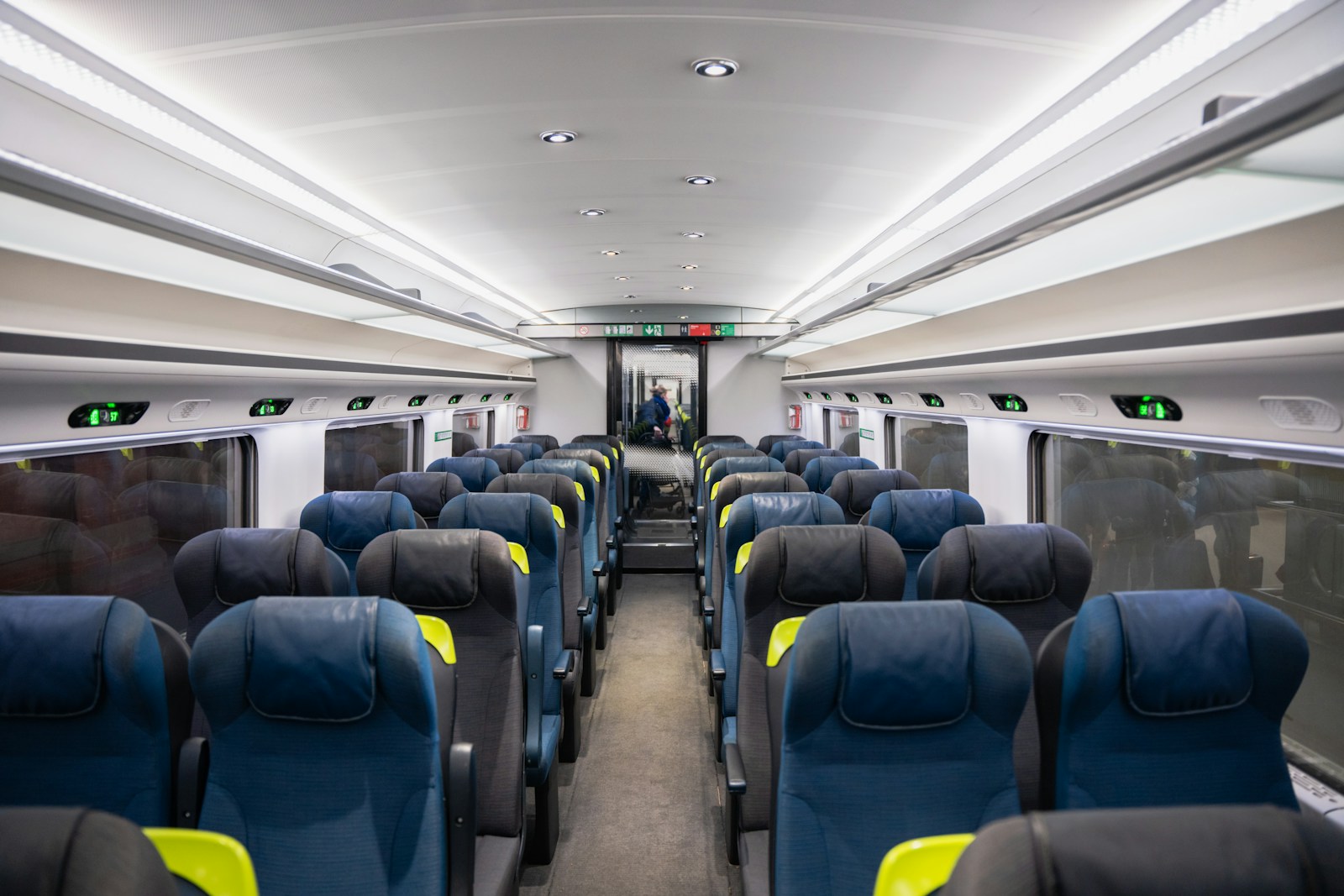
I took the ÖBB Nightjet from Vienna to Venice last month. It was the first sleeper train I have done in Europe in over a decade, and the experience is different enough from what it used to be that it deserves its own write-up. Below: how it works now, what it cost, and the small things that surprised me.
The basics
The Nightjet is the Austrian Federal Railways' (ÖBB) overnight train network, which runs across Austria, Germany, Italy, Switzerland, France, and the Netherlands. The train I took, NJ 295, leaves Wien Hauptbahnhof at 8:38 p.m. and arrives at Venezia Santa Lucia at 9:23 a.m. the next morning. About 13 hours, including a slow crawl through the Alps in the early morning that is most of the reason to take the train.
There are three classes of accommodation:
- Couchette (six-bunk, shared compartment): about €60-90 one-way
- Sleeper (three-bunk, shared compartment with sink): about €120-160 one-way
- Private sleeper (one or two-person cabin with sink, sometimes en-suite shower on newer trains): €200-280 one-way
I booked a private one-person sleeper in the new "Comfortline" cars, three weeks in advance, for €248 including breakfast. A flight from VIE to VCE on a similar date would have been €120-180 plus airport transit on both ends and a hotel night somewhere. The economics are not as different as people assume once you account for the hotel night the train replaces.
Booking
The ÖBB website is fine. It is not Skyscanner-fine. I made two booking mistakes worth noting:
Mistake 1. The site shows compartment availability but not the specific bunk you will get. I assumed I was getting a lower bunk in my private sleeper because I am one adult; I got an upper. This was a non-issue but I would have preferred the lower for a 13-hour trip.
Mistake 2. The breakfast option is opt-in, not default. It is an extra €15 and absolutely worth it. The conductor brings a tray to your cabin around 7:30 a.m. with bread, cheese, fruit, juice, and coffee. The next nearest food is a 20-minute walk from Santa Lucia after you arrive.
Book through the ÖBB site directly. The third-party booking sites add fees and sometimes lose your seat assignment.
The boarding experience
Wien Hauptbahnhof at 8 p.m. is calm in a way that no airport ever is. There is no security. There is no boarding pass. You walk to platform 4, find the car number on a small electronic sign, and step on. The conductor checks your booking on a tablet, hands you a paper card with your cabin number, and you find your room.
The cabin is small. In the private sleeper that is roughly 6 feet by 4 feet of floor space, with a fold-down bed (or, by day, a couch), a folding sink, a small closet, two power outlets, and a window. Newer cabins have a private shower; older ones share a corridor shower. Mine had the corridor shower, which I did not use because at 9 p.m. on a sleeper train you are not showering, you are sleeping.
A note on the corridor: the ÖBB sleeper cars have a long, narrow corridor running along one side, with the cabins along the other. In my car, the corridor was the source of more noise than I expected. People walking past, conductors talking, the door at the end of the car opening and closing. If you are a light sleeper, ask for a cabin in the middle of the car, not near the end.
The first three hours
The train pulled out of Vienna right on time. The first leg goes through suburban Austria, then into the southern Alpine foothills, with stops at Wiener Neustadt and Leoben. I spent these three hours doing what I had imagined doing on a sleeper train for years: I sat by the window with a book, drinking the small bottle of red wine I had bought in the station, watching the Austrian countryside fade into darkness.
It was, in fact, lovely. The lovely part is the marketing version of the sleeper train and I will admit it delivered. The kind of slowness that is no longer available on a flight. You do not feel like you are being processed. You are just on a train, going somewhere, with nothing to do except be on the train.
The middle eight hours
The middle eight hours are when the romance wears thin. The bed is fine but narrow. The train rocks differently than a plane, more side-to-side than fore-aft, and the rocking is harder to sleep through if you are not used to it. The Alps section, which crosses around 2 a.m., includes several stops where the train sits at a station for 15 minutes and the silence is louder than the motion. I slept maybe four hours in three blocks of an hour to ninety minutes each.
If you are picky about sleep, this is the part to know about. A sleeper train is not a substitute for a hotel. It is a compromise: less sleep than a hotel, more sleep than a coach economy seat, plus a savings of one hotel night and one airport day.
Breakfast and arrival
Around 7:30 a.m. the conductor knocked. I had been awake for thirty minutes watching the Italian Dolomites slide past the window in the gold morning light, which is the second great reason to take this train. The breakfast tray was simple and good: bread, cheese, salami, an apple, orange juice, a pot of decent coffee. I ate slowly. The train threaded through northern Italy in a way that flying never lets you experience.
We pulled into Venezia Santa Lucia at 9:25 a.m., two minutes late. I walked off the train into the morning, with my suitcase, no transfer, no taxi, no airport. I was in Venice by 9:35.
That last part, by the way, is the third great reason to take a sleeper train. Most European city train stations are in the actual center of the city; most airports are 45 minutes out. The arrival into Santa Lucia, where you walk out of the station and there is the Grand Canal, is genuinely better than any flight arrival can be.
What I would do differently
A short list, for next time:
- Book the lower bunk, not just any bunk in the private sleeper.
- Bring a real eye mask. The cabin curtain leaks light at every station.
- Bring foam earplugs. The corridor noise does not stop just because the train is moving.
- Eat dinner before boarding. The on-board dining is limited and not great. The Vienna station has good options.
- Skip the wine if you are a light sleeper, even though it feels like part of the experience. (See above.)
- Book the breakfast option at booking time. Adding it later is a hassle.
Is it worth it over flying?
The honest answer: it depends. If you value:
- The arrival into the city center, not an airport
- The slowness, the window, the sense of crossing a real distance
- The hotel night you skip
- The lower-stress non-airport experience
…then yes, the Nightjet is worth it. If you primarily value sleep, the flight plus a real hotel will give you more sleep than the train, and the time savings on the flight side are real.
For me, the answer was clearly yes. I will do it again. I will probably do the Berlin-to-Paris run next, which I have heard is even prettier in the morning section.
The bottom line
The European sleeper train is back. It is not the budget option it was thirty years ago. It is not a luxury cruise either. It is a slow, deliberate way to cross a country while you sleep, with the trade-off that you sleep imperfectly. The cost is comparable to a flight plus a hotel; the experience is different in ways that are worth experiencing at least once. If you are headed somewhere a Nightjet runs to, consider the train. The Alps in the morning are reason enough.